How to Read Harmonica Tabs: A Beginner's Guide
Harmonica tabs look like a wall of numbers and arrows, but they are one of the simplest music systems you will ever pick up. This guide explains how to read harmonica tabs from scratch, with no sheet music and no theory. By the end you will glance at any tab and know which hole to play and which way to breathe.
If the figures look intimidating right now, that feeling fades fast. The numbers are just hole positions, and most beginners read their first full melody within about ten minutes.
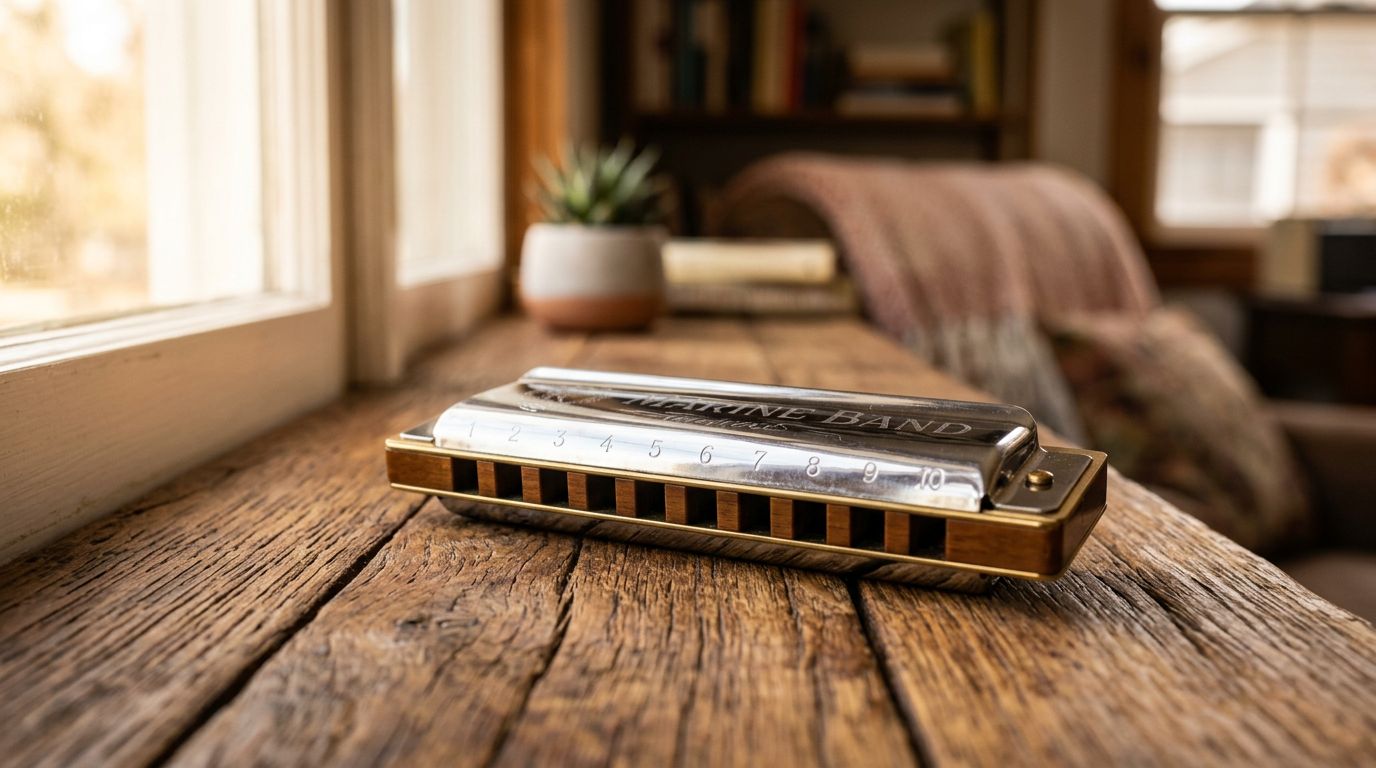
What a harmonica tab actually is
A harmonica tab is a shorthand that tells you which hole to play and whether to blow or draw, nothing more. It replaces standard notation with plain numbers, so you skip years of music study and start playing today. That is the whole idea behind harmonica tabs explained in one line: holes plus breath direction.
This works because the diatonic harmonica is laid out in a fixed pattern. Once you know the holes, the same tab plays the same tune on any standard 10-hole diatonic in the key the song was written for.
That fixed layout is why tabs feel hard for about five minutes and then suddenly do not. You are not memorising hundreds of symbols; you are learning two breath directions and ten hole positions. Anyone who can count to ten and tell an in-breath from an out-breath already has everything they need.
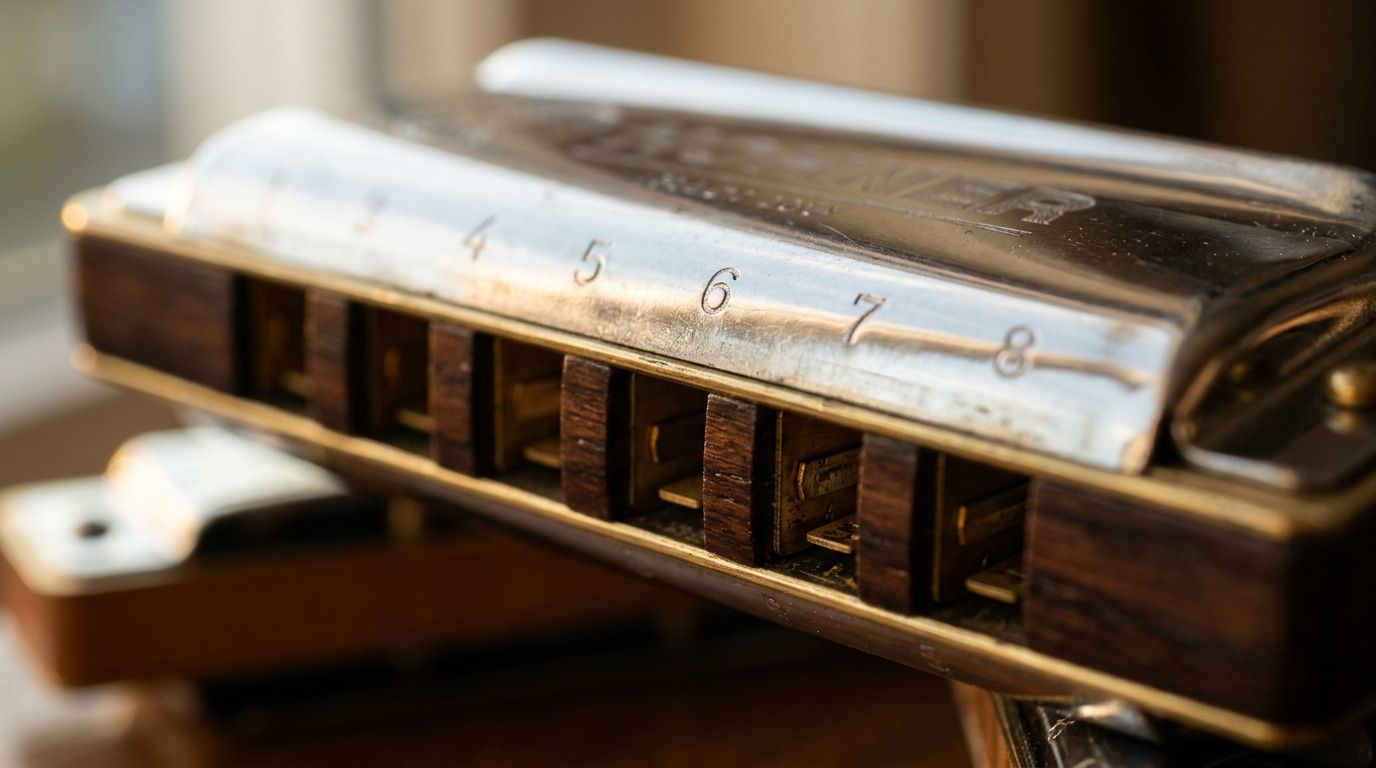
What you need before you start
You do not need much, and nothing here is expensive or hard to find.
- A standard 10-hole diatonic harmonica, usually in the key of C.
- A tab for a short, familiar song.
- Ten quiet minutes and a little patience.
A C harp is the common beginner choice because most tabs are written for it. Pick a tune you can already hum, so your ear catches mistakes before your eyes do.

The numbers and arrows: reading any tab
Every harmonica tab is built from two ideas. The number tells you the hole; the symbol next to it tells you the breath. A hole number on its own, or with a plus sign, means blow, which is breathing out. A minus sign, or a down arrow, means draw, which is breathing in.
So a plain 4 means blow into hole 4, and -4 means draw on hole 4. That single rule unlocks the melody line of almost every beginner song. The table below sums up the symbols you will meet most often.
| Symbol | What it means | How to play it |
|---|---|---|
| 5 | Blow, hole 5 | Breathe out into hole 5 |
| +5 | Blow, hole 5 | Same as above, on some sites |
| -5 | Draw, hole 5 | Breathe in on hole 5 |
| 5' | Bend, hole 5 | Advanced, skip for now |
Reading a harmonica tab is really just turning harmonica numbers to notes in order, one breath at a time. Take it slowly and say each number out loud as you play it.
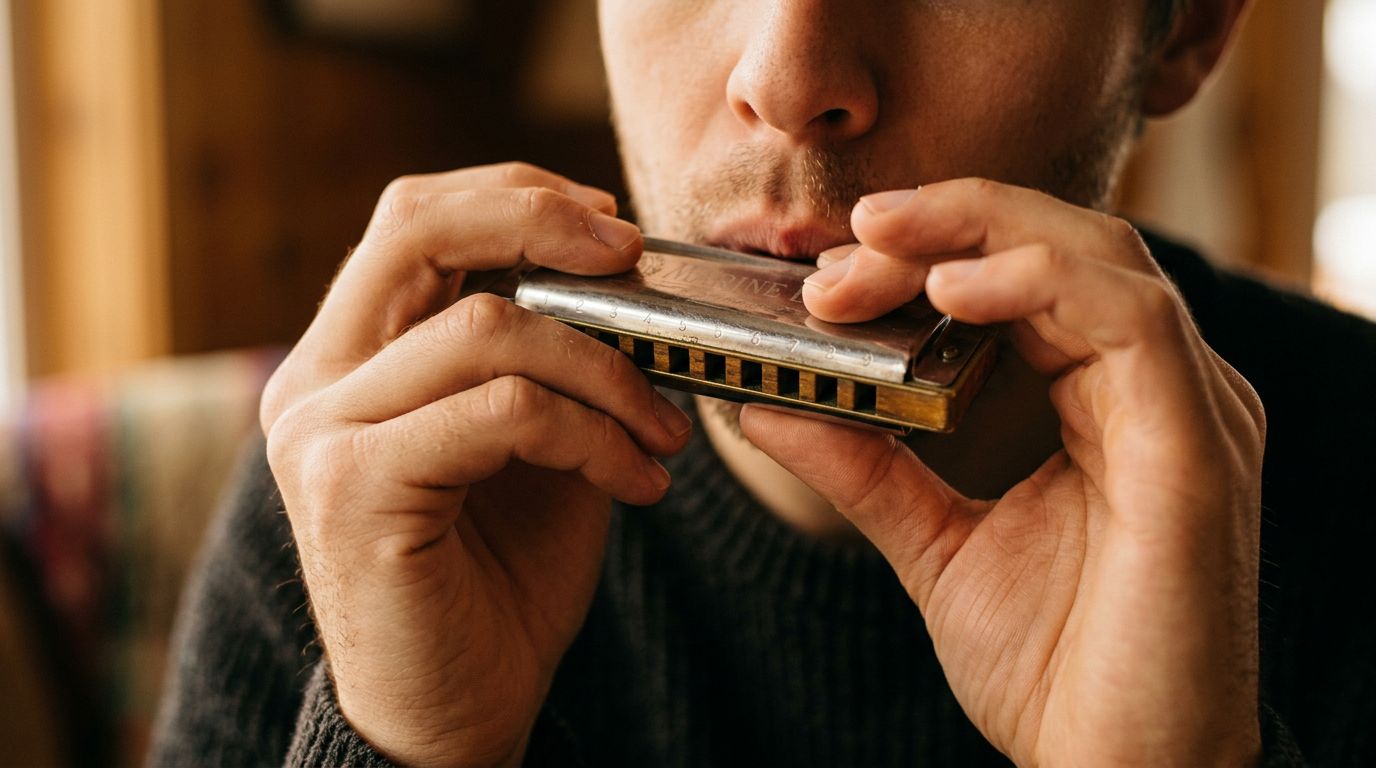
A worked example you can try
Reading clicks fastest with a concrete line in front of you. Imagine a tab that reads 4 -4 5 -4 4. Here is exactly what each symbol indicates, played one note at a time.
- 4 — blow, hole 4.
- -4 — draw, hole 4.
- 5 — blow, hole 5.
- -4 — draw, hole 4 again.
- 4 — blow, hole 4 to finish.
Play that line slowly three times and the pattern stops looking like code. That is the whole skill: see a symbol, breathe the right way, move to the next. The same method also covers how to read harp tabs, since harp is simply the players' nickname for the instrument.

Bends and the trickier symbols
Bends are the one part that takes real practice, and they are where players new to the instrument get stuck. A bend lowers the pitch of a note, and tabs usually mark it with an apostrophe, a slash or brackets around the number.
Here is the good news: you can ignore bends for your first week or two. Most beginner melodies use plain blow and draw notes, so leave the bent notes until your single notes are clean and steady. Treat bending as a technique for week three, not week one; try it too early and it only adds frustration without teaching you anything about reading.

Tabs, sheet music and notation charts
People often ask how to read harmonica notes on a traditional staff, but you rarely need to. Tabs exist precisely so you can skip standard notation, and learning how to read harmonica sheet music is a separate, optional skill for later.
One thing to expect: sites do not all use the same symbols. Some show arrows, others use plus and minus, and a few publish a full harmonica notation chart. The systems map onto each other cleanly, so once you can read one style, switching to another takes a minute, not a month. If you later want to learn how to read harmonica tablature written for other tunings or layouts, the same hole-and-breath logic still carries you through.
Beginner tips that make tabs click
These small habits are what separate a frustrating first hour from a fun one. They cost nothing and save a lot of guessing.
- Number your harmonica holes with a pencil mark while learning.
- Say each number aloud as you play to link sight and sound.
- Tap the rhythm with your foot, since tabs rarely show timing.
- Play at half speed first; real speed arrives on its own.
- Keep a relaxed mouth position so single notes stay clean.
The biggest tip is to start with a song already in your head. Your memory of the tune supplies the rhythm the tab leaves out, and your ear quietly fixes wrong holes for you.
Stick with these habits and learning to read harmonica tabs feels less like studying and more like a game you get a little better at each day. Progress is quick at the start, and that early momentum is what keeps beginners going.
Where to find tabs to practise
The fastest way to get fluent is volume: read a lot of simple songs, not one hard one. You can search a free harmonica tab library by song title or artist and have the numbers in front of you in seconds.

The collection holds more than 220,000 songs, from nursery rhymes to pop and blues, all free to read and play. Start with three short tunes you know well, then open a new tab each day and your reading speed climbs without any extra effort.
Give it a week of short, daily reads and the whole thing becomes second nature. The numbers that looked like a secret code on day one turn into a quiet set of instructions you barely think about. That is the real milestone: not memorising symbols, but trusting that any song you pull up is now something you can sit down and play.
Frequently asked questions
What do the numbers in harmonica tabs mean?
Each number is a hole on the harmonica, counted 1 to 10 from left to right. The number alone tells you which hole to play, and a nearby sign or arrow tells you whether to blow or draw. Numbers are positions, not musical notes.
What does the plus, minus or arrow mean in harmonica tabs?
A plus sign or an up arrow means blow, which is breathing out into the hole. A minus sign or a down arrow means draw, which is breathing in. These two directions cover almost every note in a beginner tab.
Do you need to read sheet music to play the harmonica?
No, you do not need to read sheet music at all. Tabs use plain hole numbers instead of a musical staff, so a complete beginner can play real songs on day one. Standard notation is an optional skill you can add much later.
Are harmonica tabs the same on every website?
Not exactly, since sites use slightly different symbols for the same actions. Some prefer arrows, others use plus and minus signs for blow and draw. The logic is identical, so once you read one notation system, the rest are easy to follow.
How long does it take to learn to read harmonica tabs?
Most people read a simple tab within ten to fifteen minutes. The basic system of holes and breath directions is quick to grasp, and only bends take longer. A few short practice sessions are enough to feel confident.