How to Play the Mouth Organ Harmonica for Beginners
Learning how to play the mouth organ harmonica is one of the gentlest starts in all of music. You hold it, you breathe, and within a day you are making real notes. This step-by-step guide walks a complete beginner from holding the instrument to playing a clean single note, with no theory and no sheet music.
The mouth organ is simply another name for the harmonica, so the words mean the same thing throughout. You do not need any musical background to start.

What you need to begin
Playing the harmonica costs little to start, and the kit is small. A few minutes of setup is all that stands between you and your first sound.
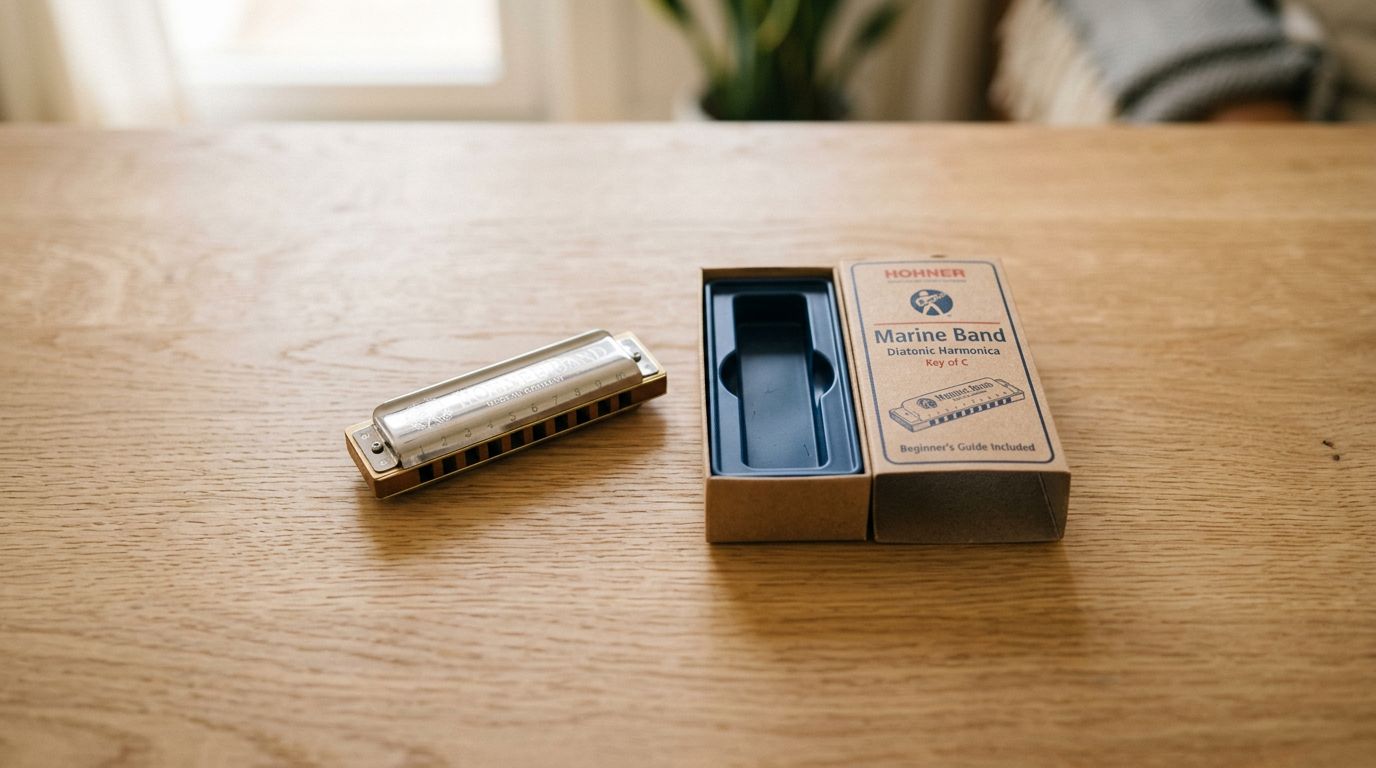
- A 10-hole diatonic harmonica in the key of C.
- A quiet spot where you can breathe and listen.
- Ten minutes a day, more often than once a week.
The key of C diatonic is the standard choice for mouth organ for beginners, because most lessons and tabs are written for it. Skip the fancy chromatic models for now; they add a slide and complexity you do not yet need.
Step 1: Hold the harmonica correctly
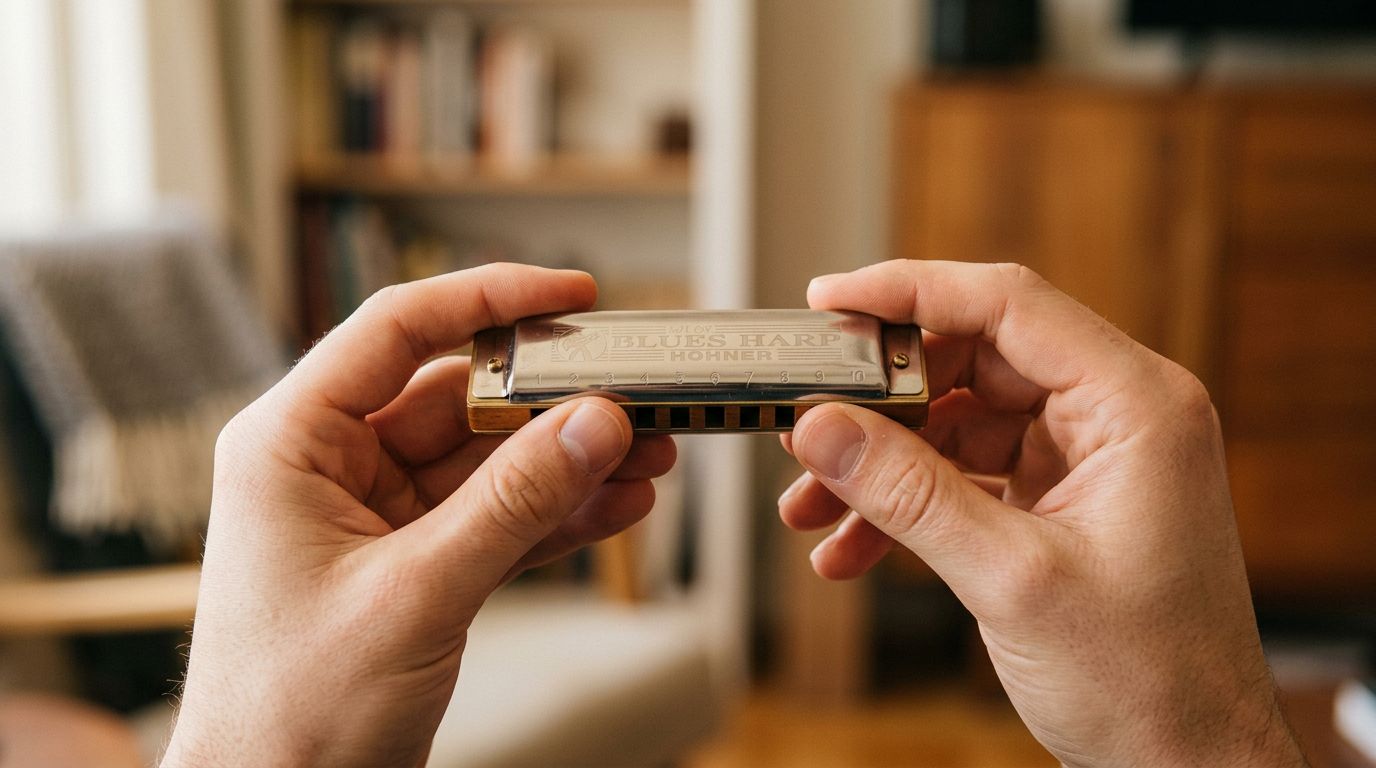
Hold the harp with the numbers facing up and the low notes on your left. Rest it between your thumb and index finger so the back stays open, and let your other fingers curve loosely behind it. A relaxed grip keeps the tone full and lets you cup your hands later for effects.
Bring it to your mouth rather than reaching your head down to it. Good posture here is part of basic harmonica technique, and it makes every later step easier. Check that your top lip rests lightly on the cover plate instead of clamping down, so the air can move freely and the tone stays open.
Step 2: Master blow and draw
Every note on the instrument comes from two simple actions: blow and draw. To blow is to breathe out through a hole; to draw is to breathe in. This is the heart of how you play a harmonica, and it is why beginners make music so quickly.
Breathe from your belly, not your throat, and keep the air slow and steady. Rushed, shallow breathing is the most common reason a first note sounds thin, so stay relaxed and let the reed do the work. Aim for a warm, full tone rather than a loud one; volume comes from open airflow, not from forcing more breath. If a note cracks, ease off the air and it settles at once.

Step 3: Play a clean single note
The skill that defines real playing is sounding one hole at a time instead of a chord. There are two ways to isolate a single note, and both are worth knowing.
| Method | How it works | Best for |
|---|---|---|
| Pucker | Lips form a small, focused circle | Most beginners, start here |
| Tongue block | Tongue covers extra holes on the left | Fuller tone, learn later |
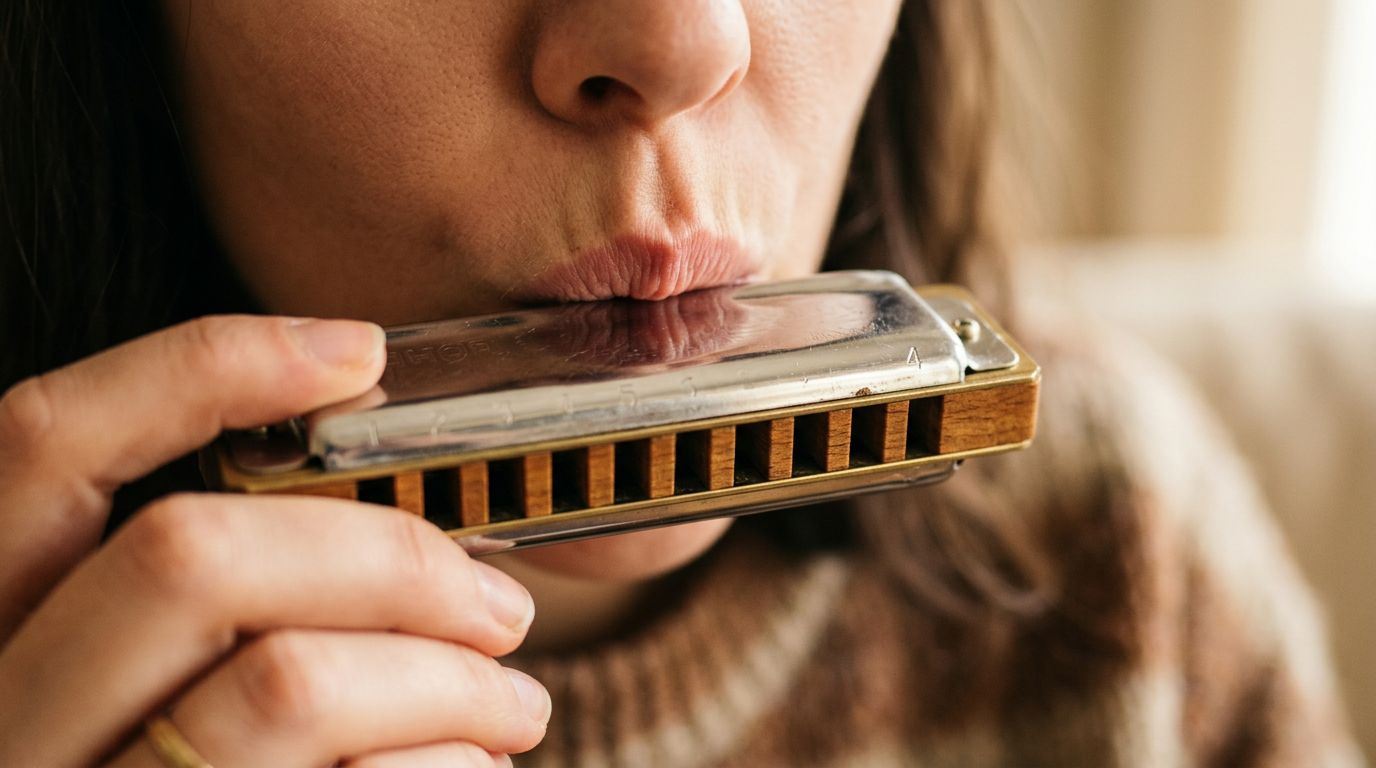
Start with the pucker. Narrow your lips as if sipping through a straw, aim for one hole, and keep the bottom lip soft. It feels fiddly for a few minutes, then it clicks, and that click is the moment learning to play the mouth organ stops feeling hard.
If you still hear two or three notes at once, your lips are covering more than one hole. Move the harp a touch, soften the corners of your mouth, and try again until the sound narrows to a single clear tone. Most people who play a 10 hole harmonica get this within a few short sessions.
Step 4: Build a simple practice routine
Short, regular sessions beat rare long ones. A clear routine is what turns scattered effort into steady progress, so keep these steps in order.
- Play long, single blow notes from hole 4 to hole 7.
- Switch to draw notes on the same holes.
- Move slowly between two neighbouring holes, keeping each clean.
- Finish by holding one note as steadily as you can.
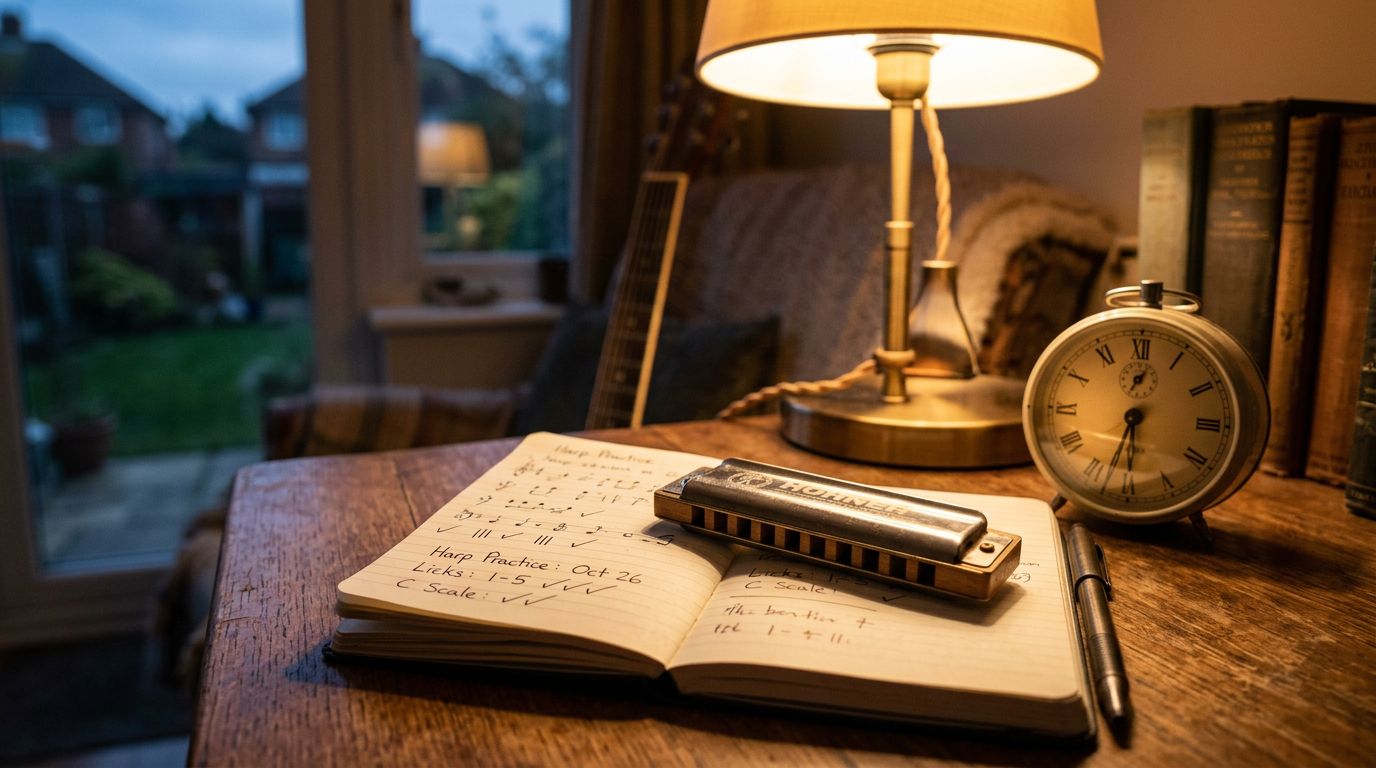
Ten focused minutes a day will take you further than an hour once a week. This is the core of how to play the harmonica for beginners: small wins, repeated often.
Step 5: Play your first song
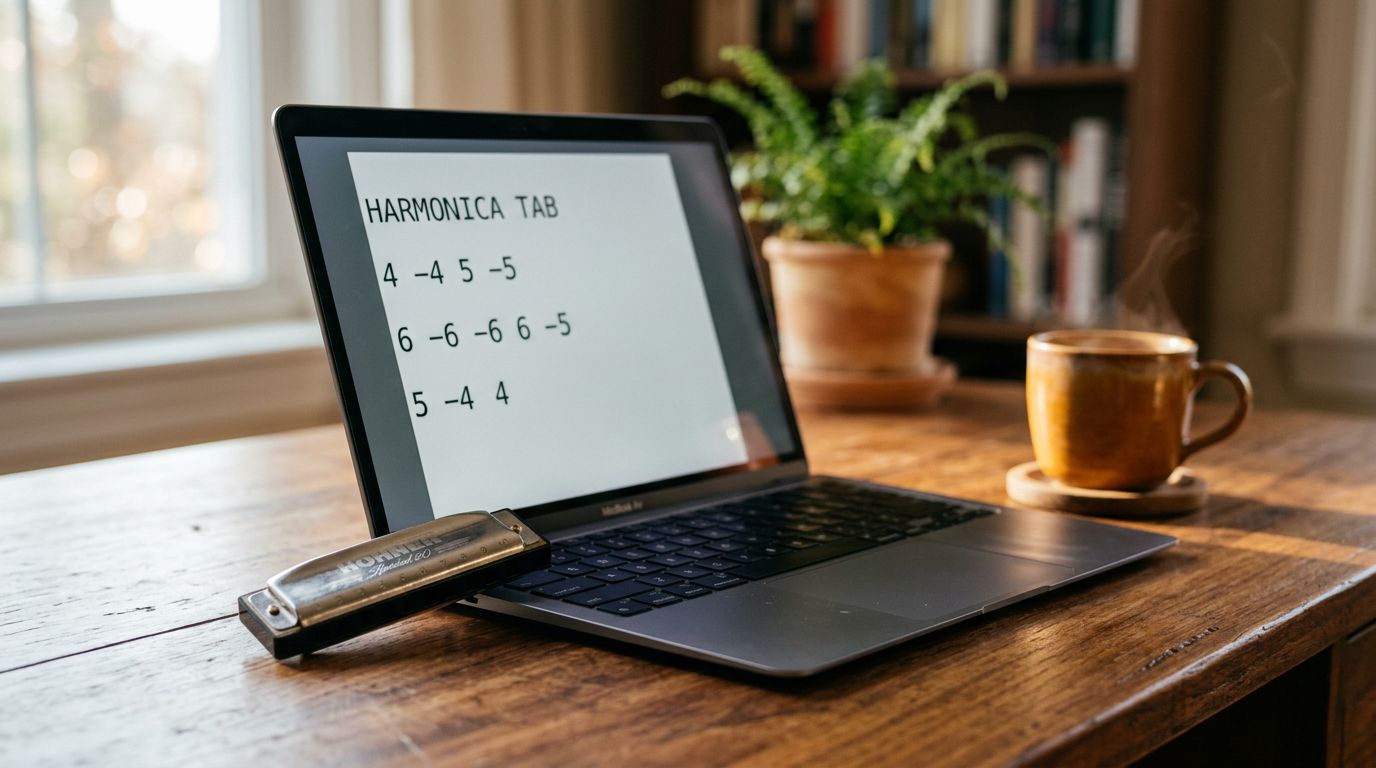
Once your single notes are reliable, the fun starts: real tunes. A harmonica tab tells you which hole to play and whether to blow or draw, so you can follow a song without reading music. Pick something short that you already know by ear.
You can search a free harmonica tab library by title or artist and have the numbers in front of you in seconds. Keeping that first song simple matters more than the choice itself. A nursery rhyme or a slow folk tune you have known for years works best, because your memory already supplies the rhythm and your ear catches any wrong notes.
Common beginner mistakes to avoid
A few habits trip up almost everyone at the start. Knowing them in advance saves days of quiet frustration.
- Biting or pressing too hard, which chokes the tone.
- Breathing fast and tense instead of slow and deep.
- Chasing bends in week one; they are an advanced technique.
- Practising only songs and never single notes.
None of these are serious, and all of them fade with calm, regular practice. If a note will not sound, the fix is almost always softer breath, not more force. Patience with these basics is what separates people who quit early from those still happily playing the mouth organ harmonica a year later.
What to expect in your first week
Your first week playing the mouth organ harmonica follows a simple arc. Day one is single sounds, by day three you hold clean notes, and by the end of the week a short tune is within reach. Progress feels fast at the start, which is exactly what keeps beginners going.

Do not measure yourself against recordings yet. The goal this week is control: steady breath, one clear hole, a relaxed jaw. Speed and bends arrive on their own once those basics are automatic.
Where to practise once you start
The fastest way to improve is to play often and play things you enjoy. That keeps motivation high while the basics settle into muscle memory.
The free library on the site holds more than 220,000 songs, from nursery rhymes to blues, all searchable by song or artist. When your single notes feel steady, open a new tab each day and let the playing itself carry your progress.
Variety is the quiet secret here: ten easy songs teach more than one hard one. Each new tune drills the same single notes in a slightly different order, so your timing and breath control sharpen together without it ever feeling like a chore.
Frequently asked questions
Is the mouth organ hard to play for a beginner?
No, the harmonica is one of the easiest instruments to begin. You can make a clear note on your first day, since playing only needs steady breathing and a relaxed grip. The harder skills, like bending, come much later and are optional at first.
Which harmonica should a beginner buy?
Start with a 10-hole diatonic harmonica in the key of C. It is the standard beginner model, suits almost every lesson and tab, and is inexpensive. Avoid chromatic or specialty harps until you have the basics down.
How long does it take to learn to play the harmonica?
Most people play a simple tune within a week of short daily practice. Clean single notes take a little longer to feel natural, usually two to three weeks. Steady, relaxed breathing speeds the whole process up.
How do you play single notes on a mouth organ?
Narrow your lips into a small circle and aim for one hole, a method called the pucker. Keep the bottom lip soft and the breath gentle. Tongue blocking is a second technique that gives a fuller tone, but most beginners start with the pucker.
Do you need to read music to play the harmonica?
No, you do not need to read standard music. Harmonica tabs use plain hole numbers and arrows for blow and draw, so a beginner can play real songs without any notation. Reading music is an optional skill for much later.