How Does a Harmonica Work? A Simple Explainer
A harmonica works by turning your breath into sound through tiny metal reeds. When you blow or draw air through a hole, a reed inside vibrates and produces a clear note. This page explains how a harmonica works part by part, in plain language and with no music theory.
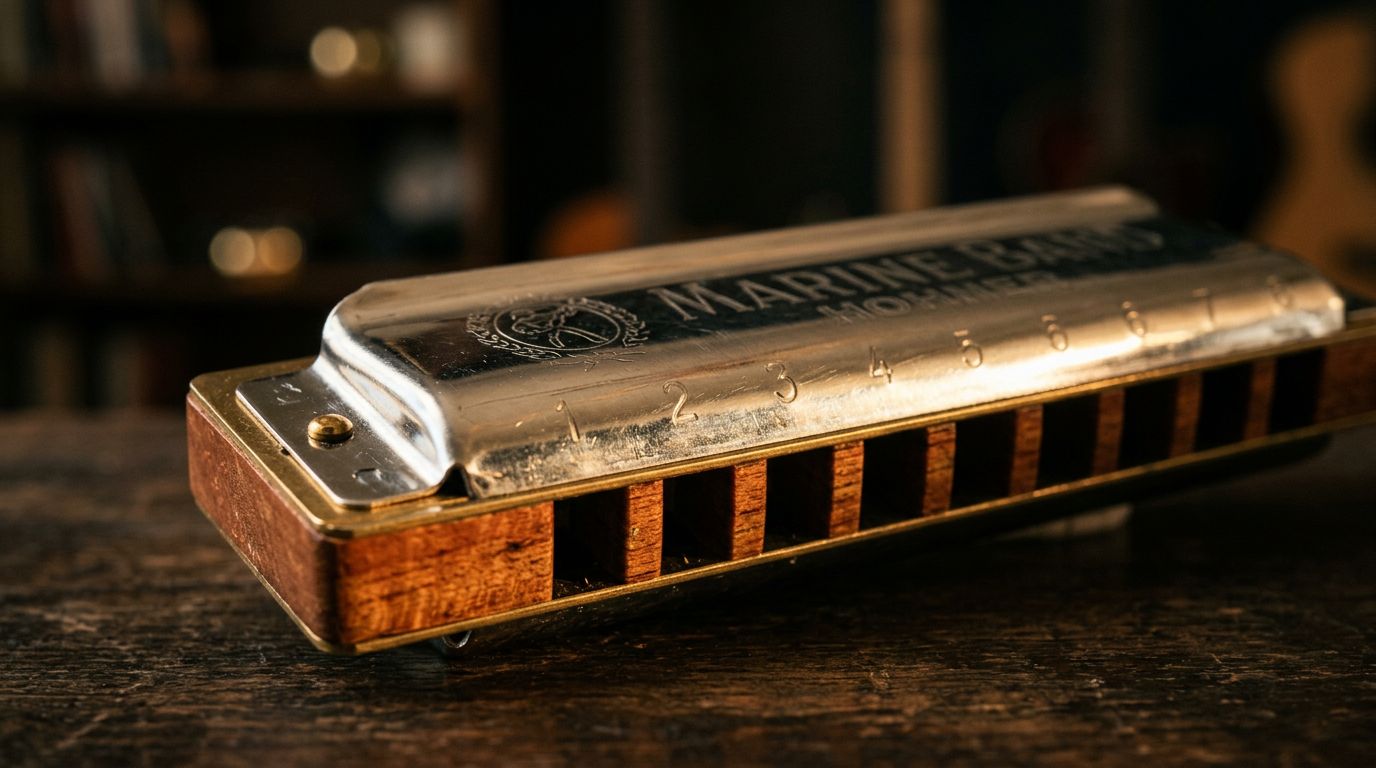
What is a harmonica?
A harmonica, also called a mouth organ, is a small free-reed wind instrument you play with your breath instead of your fingers. It packs a full set of notes into a pocket-sized metal and plastic body. The standard beginner model is the 10-hole diatonic harmonica, the kind used across blues, folk and pop.

The parts that make it work
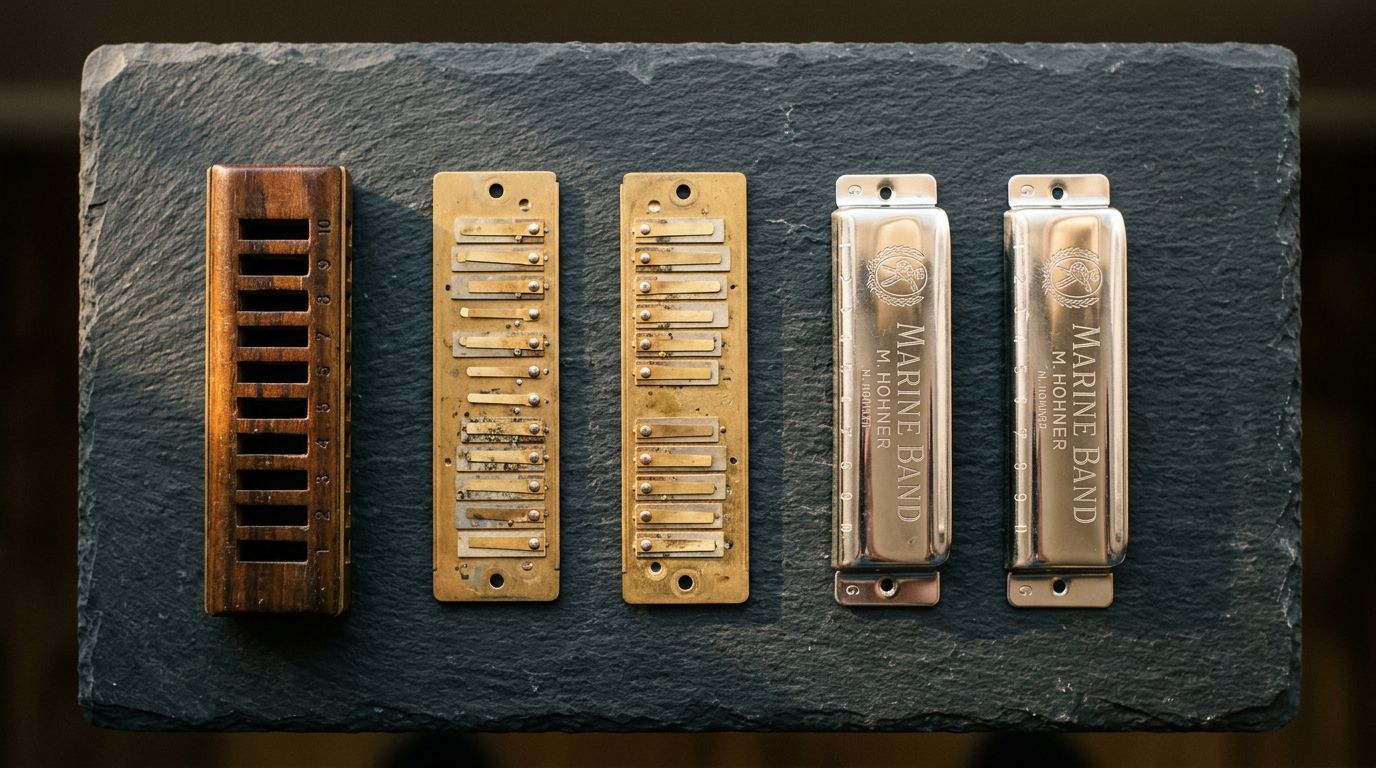
Understanding how harmonicas work is easier once you know the three main parts. There are only a few pieces, and each has a clear job.
| Part | What it does |
|---|---|
| Comb | The body with air channels, one per hole |
| Reed plates | Metal plates holding the reeds that make the sound |
| Cover plates | The outer shells that project the tone and protect the reeds |
That simple sandwich of comb, reed plates and cover plates is the whole instrument. Knowing what harmonicas are made of also answers a common question about how they are built: thin brass reeds riveted to a plate, with no electronics involved.
How a harmonica makes sound
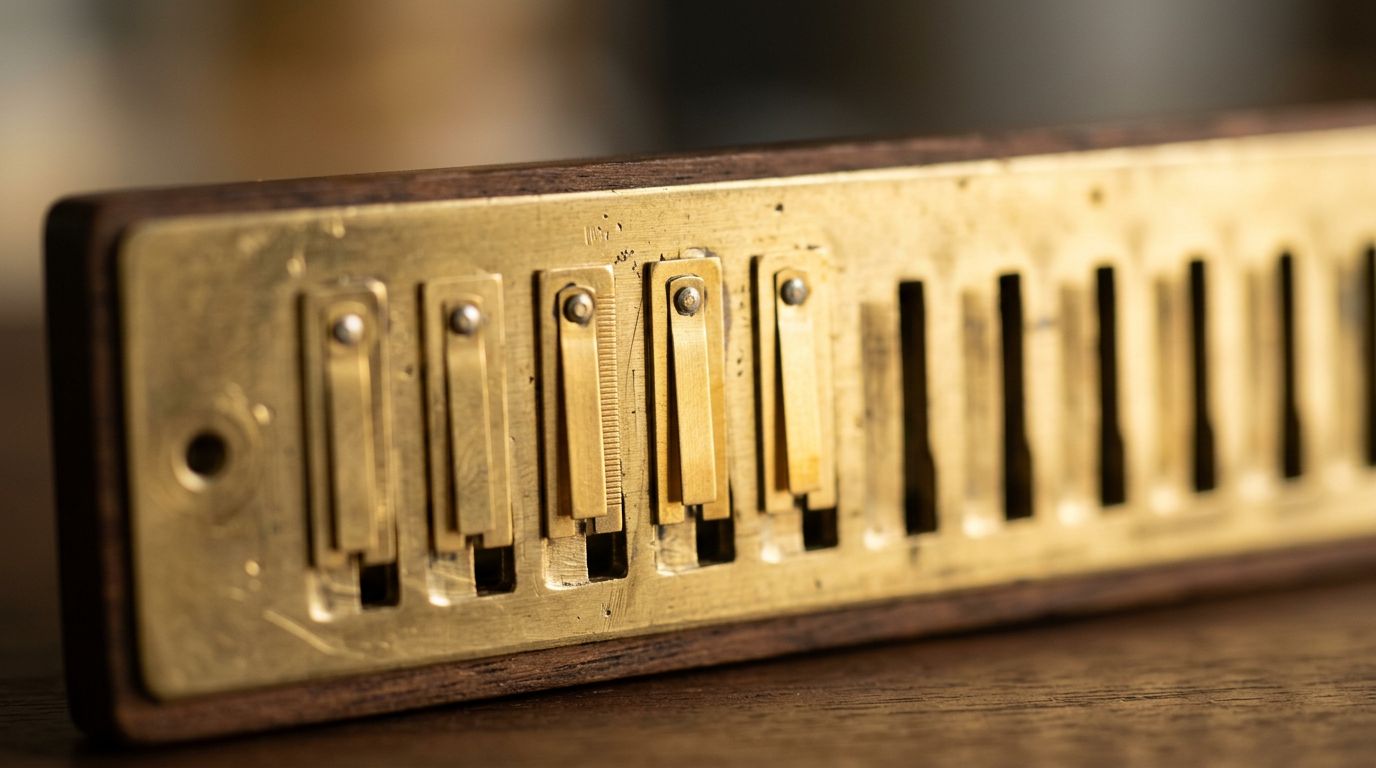
Here is how a harmonica makes sound in one sentence: moving air bends a thin metal reed back and forth, and that rapid vibration is the note you hear. Each reed is a small tongue of brass fixed at one end and free at the other, sitting over a matching slot. The whole process has just three steps.
- Air flows into a hole in the comb.
- It sets a brass reed vibrating inside its slot.
- That vibration speed becomes the pitch you hear.
When you breathe through a hole, air pushes the free end of the reed through its slot and springs it back, over and over, hundreds of times a second. The speed of that vibration sets the pitch. This free-reed design is also why the instrument counts as a free-reed aerophone rather than a true woodwind, since it has no cane reed and no resonating pipe. Brass simply flexes, and the air does the rest.
Why each hole plays different notes
Every hole holds two reeds, not one. A shorter, thinner reed vibrates faster and gives a higher note; a longer, heavier reed vibrates slower and gives a lower one. That is why the same hole can sound two pitches depending on your breath.
One reed is tuned to sound when you blow, and the other when you draw, so a single hole gives you two different notes. String ten holes together and a small diatonic model covers every note you need for hundreds of songs. Lower-pitched holes sit on the left, higher ones on the right, which is why melodies climb as you move across the instrument. A chromatic harmonica works the same way but adds a button-operated slide for the in-between notes.
Where the harmonica came from
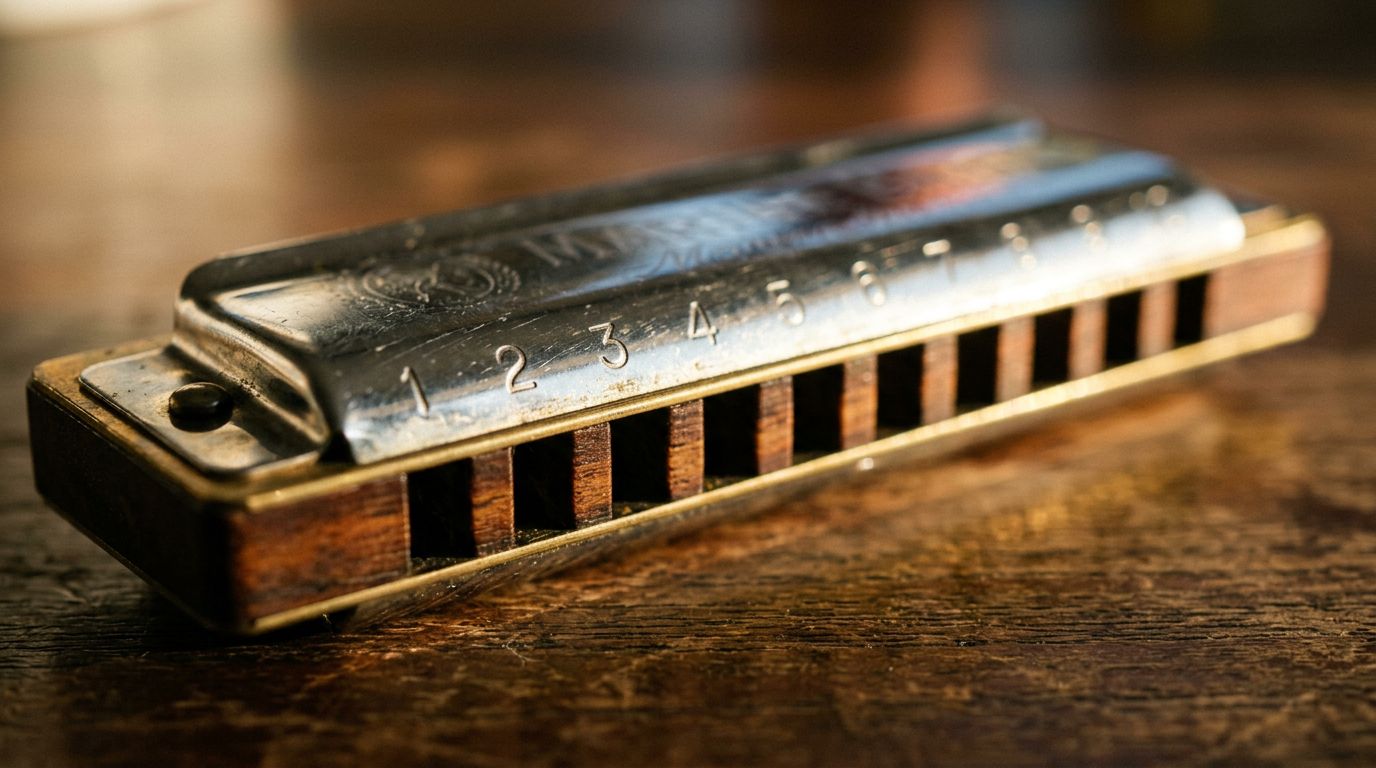
The free-reed idea behind the instrument is old, building on much earlier free-reed instruments from Asia. The modern mouth organ was developed in Germany in the early 1820s and spread quickly because it was cheap, loud for its size and easy to carry. People still ask who invented the harmonica, but it grew from several makers rather than a single inventor. That low cost is a big reason it became a staple of blues and folk music worldwide.
Try one for yourself
The best way to understand how a mouth organ works is to play a few notes on one. Once you hear a reed respond to your breath, the whole idea clicks in a way no diagram can match.

If you want to put it into practice, you can search a free harmonica tab library by song or artist and follow the numbers for a tune you know. The collection holds more than 220,000 songs, all free to read and play.
Frequently asked questions
How does a harmonica make sound without electricity?
It uses moving air, not power. Your breath pushes thin brass reeds through narrow slots, and their fast vibration creates the note. Nothing is amplified or electronic, which is why a harmonica plays anywhere with no battery or cable.
Why does one hole make two different notes?
Each hole contains two reeds tuned to different pitches. One sounds when you blow out and the other when you draw in, so a single hole gives two notes. This doubles how many sounds a small harmonica can produce.
Is a harmonica a woodwind instrument?
Not quite. A harmonica is a free-reed aerophone, a wind instrument that makes sound with vibrating metal reeds. True woodwinds use cane reeds or an air column in a pipe, so the harmonica sits in its own free-reed family.
What is a harmonica made of?
A harmonica is built from a comb, two reed plates and two cover plates. The reeds are usually brass, the plates are metal, and the comb may be plastic, wood or metal. Together they form a simple, durable instrument.
Who invented the harmonica?
No single person invented it. The modern free-reed harmonica took shape in Germany in the early 1820s, drawing on older free-reed instruments from Asia. Several makers refined the design into the pocket harmonica we know today.